Medical Disclaimer
The information in this article is for educational purposes only and is not intended as medical advice. While passionflower extract is generally considered safe for most people when used appropriately, it may not be suitable for everyone. Always consult with a healthcare provider before starting any new supplement, especially if you have existing health conditions, are pregnant or nursing, or are taking medications. This article references scientific studies and academic research, but individual responses to supplements can vary. Never use passionflower extract as a replacement for prescribed medications without consulting your healthcare provider.
Anxiety disorders affect approximately 19.1% of U.S. adults each year, according to the National Institute of Mental Health. While conventional treatments like therapy and medication are effective, many people seek natural alternatives either as complementary approaches or as gentler options with fewer side effects. Among these natural remedies, passionflower extract (Passiflora incarnata) has emerged as a promising option with a growing body of scientific research supporting its anxiolytic (anxiety-reducing) properties.
This comprehensive guide explores the science behind passionflower extract for anxiety relief, its traditional uses, modern research findings, proper dosage guidelines, potential side effects, and how it compares to other natural anxiety remedies.
What is Passionflower Extract?
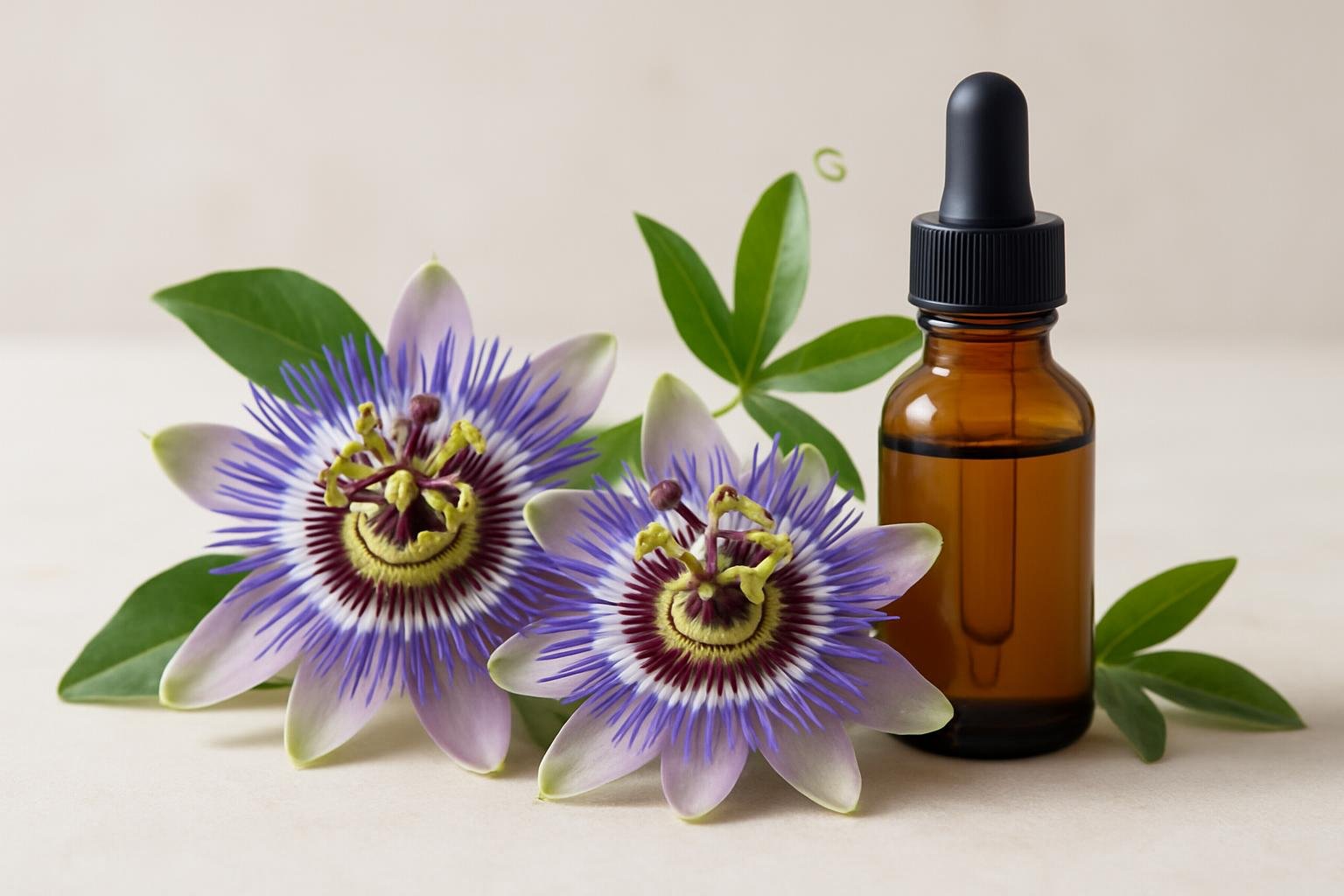
Passionflower (Passiflora incarnata) is a climbing vine native to the southeastern United States, as well as Central and South America. The plant is known for its striking, intricate flowers and has been used medicinally by indigenous peoples for centuries. While there are over 500 species in the Passiflora genus, Passiflora incarnata is the species most commonly used for medicinal purposes and anxiety relief.
The medicinal components of passionflower are primarily found in the aerial parts of the plant—the leaves, stems, and flowers. These parts contain several bioactive compounds, including:
- Flavonoids: Including vitexin, isovitexin, orientin, and isoorientin
- Alkaloids: Such as harman, harmine, and harmaline
- Gamma-aminobutyric acid (GABA): An inhibitory neurotransmitter that helps regulate nervous system activity
- Maltol: A compound with potential sedative effects
Passionflower extract is available in various forms, including tinctures, capsules, tablets, teas, and liquid extracts. The extraction process typically involves using alcohol, water, or a combination of both to draw out the plant's beneficial compounds.
Historical and Traditional Uses
Passionflower has a rich history of traditional use spanning centuries and cultures:
Indigenous American Use
Native American tribes, including the Cherokee, Houma, and Natchez, used passionflower for various medicinal purposes. The Cherokee prepared infusions from the roots to treat liver problems, as a topical wash for wounds and inflammations, and as a tonic for the nerves. The Houma used the plant to treat problems with the eyes and skin.
European Adoption
European settlers learned about passionflower from indigenous peoples and began incorporating it into their own medicinal practices. By the late 16th century, Spanish explorers had introduced the plant to Europe, where it gained popularity for its calming properties.
Traditional Medicine Systems
In traditional medicine systems, passionflower has been used to address a variety of conditions:
- Insomnia and sleep disturbances
- Anxiety and nervousness
- Seizures and epilepsy
- Pain relief
- Symptoms of menopause
- Attention deficit hyperactivity disorder (ADHD)
- Digestive issues
By the early 20th century, passionflower was listed in the United States National Formulary (1916-1936) and the British Herbal Pharmacopoeia (1983) as a sedative and sleep aid.
Scientific Research on Passionflower for Anxiety
Modern scientific research has begun to validate many of the traditional uses of passionflower, particularly for anxiety relief. Here's a look at some of the key studies:
Clinical Studies in Humans
Several clinical trials have investigated the anxiolytic effects of passionflower:
Preoperative Anxiety: A 2008 double-blind, placebo-controlled study published in Anesthesia & Analgesia examined the effects of passionflower extract on anxiety in patients scheduled for surgery. Sixty patients received either passionflower extract or a placebo 90 minutes before surgery. The passionflower group showed significantly lower anxiety levels compared to the placebo group, without any difference in sedation levels [1].
Generalized Anxiety Disorder (GAD): A 2001 study published in the Journal of Clinical Pharmacy and Therapeutics compared the efficacy of passionflower extract to the benzodiazepine oxazepam in treating GAD. While oxazepam worked more quickly, passionflower was equally effective by the end of the four-week trial and produced fewer side effects and less impairment of job performance [2].
Dental Anxiety: A 2017 randomized, double-blind, placebo-controlled trial published in the Journal of Dental Research, Dental Clinics, Dental Prospects evaluated passionflower's effects on anxiety before dental procedures. Patients who received passionflower extract showed significantly reduced anxiety compared to those who received a placebo [3].
Mechanisms of Action
Research suggests that passionflower may reduce anxiety through several mechanisms:
GABA Enhancement: Many of passionflower's anxiolytic effects appear to be related to the gamma-aminobutyric acid (GABA) system. GABA is the primary inhibitory neurotransmitter in the brain, meaning it reduces neuronal excitability. Studies suggest that compounds in passionflower may bind to GABA receptors, increasing the inhibitory activity of GABA and producing calming effects [4].
Monoamine Oxidase (MAO) Inhibition: Some research indicates that certain alkaloids in passionflower may have mild MAO inhibitory effects, which could increase levels of mood-regulating neurotransmitters like serotonin, dopamine, and norepinephrine [5].
Antioxidant Effects: The flavonoids in passionflower have antioxidant properties that may help protect neurons from oxidative stress, which has been implicated in anxiety disorders [6].
Animal Studies
Numerous animal studies have demonstrated the anxiolytic effects of passionflower extract:
A 2016 study published in Phytotherapy Research found that passionflower extract produced anxiolytic effects in mice comparable to diazepam (a benzodiazepine), without the sedative side effects [7].
Another study published in the Journal of Ethnopharmacology demonstrated that passionflower extract increased GABA levels in rat brains, supporting its traditional use as an anxiolytic and sedative [8].
Proper Dosage for Anxiety Relief
Determining the right dosage of passionflower extract depends on several factors, including the form of the supplement, the concentration of active compounds, individual body chemistry, and the severity of anxiety symptoms. Here are general guidelines based on clinical studies and expert recommendations:
Standardized Extract (Capsules/Tablets)
- Typical dosage: 500-1000 mg, 1-3 times daily
- Look for: Products standardized to contain 3.5% flavonoids or 0.8% isovitexin
Liquid Extract/Tincture
- Typical dosage: 10-30 drops (0.5-1 mL), 3 times daily
- Concentration: Usually 1:1 to 1:5 (herb to solvent ratio)
Tea
- Typical preparation: 1-2 teaspoons (2-4 grams) of dried herb steeped in 8 oz of hot water for 10-15 minutes
- Frequency: 1-3 cups daily
Important Dosing Considerations
When using passionflower extract for anxiety relief, keep these considerations in mind:
Start Low and Go Slow: Begin with the lower end of the dosage range and gradually increase if needed and tolerated.
Timing: For acute anxiety, take passionflower 30-60 minutes before anticipated stressful events. For general anxiety, consistent daily use may be more effective.
Duration: While some people report immediate effects, the full benefits of passionflower may take 2-4 weeks of regular use to become apparent.
Cycling: Some herbalists recommend taking periodic breaks from passionflower (e.g., 5 days on, 2 days off, or 3 weeks on, 1 week off) to prevent tolerance.
Safety Profile and Potential Side Effects
Passionflower is generally recognized as safe (GRAS) by the FDA when used appropriately. However, like any supplement, it can cause side effects in some individuals and may interact with certain medications.
Common Side Effects
Side effects of passionflower are typically mild and may include:
- Drowsiness or sedation
- Dizziness
- Confusion (especially at higher doses)
- Nausea or gastrointestinal discomfort
- Altered consciousness or "fuzzy thinking"
- Headache
Contraindications
Passionflower should be avoided or used only under medical supervision in the following circumstances:
Pregnancy and Breastfeeding: Passionflower has traditionally been used to stimulate the uterus and may potentially cause contractions. It should be avoided during pregnancy. There is insufficient data on its safety during breastfeeding.
Surgery: Due to its sedative effects, passionflower should be discontinued at least two weeks before scheduled surgery to prevent potential interactions with anesthesia.
Liver or Kidney Disease: Since these organs are responsible for metabolizing and eliminating supplements from the body, individuals with liver or kidney impairment should consult a healthcare provider before using passionflower.
Drug Interactions
Passionflower may interact with several types of medications:
Sedatives and CNS Depressants: Passionflower may enhance the effects of medications that cause drowsiness, including:
- Benzodiazepines (e.g., diazepam, lorazepam)
- Barbiturates
- Opioid pain medications
- Sleep medications
- Some antidepressants
- Alcohol
Blood Thinners: Some compounds in passionflower may affect blood clotting, potentially increasing the risk of bleeding when combined with anticoagulant or antiplatelet medications.
Antihypertensives: Passionflower may enhance the effects of medications that lower blood pressure.
Monoamine Oxidase Inhibitors (MAOIs): Due to its potential mild MAO inhibitory effects, passionflower should be used cautiously with MAOI antidepressants.
Comparing Passionflower to Other Natural Anxiety Remedies
How does passionflower compare to other popular natural remedies for anxiety? Here's a comparative overview:
Passionflower vs. Valerian Root
Similarities: Both herbs work on the GABA system and have sedative properties.
Differences: Valerian tends to be more sedating and is often better for sleep issues, while passionflower may provide anxiety relief with less sedation. Valerian also has a strong, unpleasant odor that some find off-putting, whereas passionflower is relatively odorless.
Research Comparison: Both herbs have moderate clinical evidence supporting their use for anxiety, though valerian has been more extensively studied for insomnia.
Passionflower vs. Kava
Similarities: Both herbs have demonstrated anxiolytic effects in clinical studies.
Differences: Kava tends to produce stronger anxiolytic effects but has been associated with rare cases of liver toxicity. Passionflower has a better safety profile but may be less potent for severe anxiety.
Research Comparison: Kava has more robust clinical evidence for anxiety relief but more safety concerns.
Passionflower vs. Ashwagandha
Similarities: Both are adaptogenic herbs that may help the body manage stress.
Differences: Ashwagandha works primarily through modulating stress hormones and has additional benefits for physical performance and thyroid function. Passionflower works more directly on the GABA system and may have more immediate calming effects.
Research Comparison: Ashwagandha has more research supporting its use for chronic stress and stress-related conditions, while passionflower may be better studied for acute anxiety.
Passionflower vs. L-Theanine
Similarities: Both compounds promote relaxation without significant sedation.
Differences: L-theanine is an amino acid (not an herb) found in tea that promotes alpha brain waves associated with relaxed alertness. Passionflower works more through the GABA system.
Research Comparison: L-theanine has more research on cognitive effects during anxiety, while passionflower has more traditional use and clinical studies specifically for anxiety disorders.
How to Choose a Quality Passionflower Supplement
The effectiveness of passionflower extract depends significantly on the quality of the supplement. Here are key factors to consider when selecting a passionflower product:
Form and Bioavailability
Different forms of passionflower offer different advantages:
- Liquid extracts and tinctures typically offer the highest bioavailability and fastest onset of action.
- Standardized extracts in capsule form provide consistent potency and convenience.
- Teas may be less potent but offer a pleasant ritual that can itself be calming.
Quality Indicators
Look for these quality markers when purchasing passionflower supplements:
- Standardization: Products standardized to contain specific levels of active compounds (e.g., flavonoids or isovitexin) ensure consistent potency.
- Species identification: Confirm the product contains Passiflora incarnata specifically, not other Passiflora species.
- Third-party testing: Independent verification of purity and potency by organizations like USP, NSF, or ConsumerLab.
- Organic certification: Reduces exposure to pesticides and other contaminants.
- Full-spectrum extracts: These contain the complete range of beneficial compounds found in the plant.
Red Flags to Avoid
Be wary of products that:
- Make exaggerated claims about curing anxiety disorders
- Don't specify which part of the plant is used (leaves, flowers, stems, etc.)
- Don't provide information about extraction methods
- Contain numerous fillers, artificial colors, or preservatives
- Are unusually cheap compared to other quality brands
Integrating Passionflower into an Anxiety Management Plan
While passionflower can be a valuable tool for anxiety relief, it's most effective when used as part of a comprehensive approach to anxiety management. Here are strategies for integrating passionflower into a holistic anxiety plan:
Complementary Natural Approaches
Consider combining passionflower with these evidence-based natural approaches:
- Mindfulness meditation: Research shows regular meditation practice can significantly reduce anxiety symptoms.
- Regular exercise: Physical activity releases endorphins and reduces stress hormones.
- Breathing techniques: Practices like diaphragmatic breathing activate the parasympathetic nervous system.
- Cognitive-behavioral strategies: Techniques like cognitive restructuring help challenge anxious thoughts.
- Adequate sleep: Sleep deprivation can exacerbate anxiety; passionflower may help improve sleep quality.
Working with Healthcare Providers
For optimal results and safety:
- Inform all healthcare providers about your use of passionflower
- Consider working with an integrative medicine practitioner or herbalist familiar with botanical medicines
- Don't discontinue prescribed medications without medical supervision
- Be open to a combined approach that may include conventional treatments alongside natural remedies
Tracking Effectiveness
Keep a journal to monitor your response to passionflower, noting:
- Dosage and timing
- Effects on anxiety symptoms (both positive and negative)
- Any side effects experienced
- How it interacts with other anxiety management strategies
- Patterns in effectiveness (time of day, relation to meals, etc.)
Conclusion
Passionflower extract represents a promising natural option for anxiety relief with a long history of traditional use and growing scientific support. Its multiple bioactive compounds appear to work primarily through the GABA system to produce calming effects without the significant side effects associated with many conventional anti-anxiety medications.
While passionflower is generally well-tolerated and safe for most people, it's important to approach its use thoughtfully—starting with appropriate dosages, being aware of potential interactions and contraindications, and selecting high-quality supplements. As with any approach to anxiety management, individual responses vary, and what works well for one person may not be as effective for another.
For those seeking natural alternatives or complements to conventional anxiety treatments, passionflower offers a gentle yet potentially effective option worth considering as part of a comprehensive anxiety management strategy. As always, consulting with healthcare providers knowledgeable about botanical medicines can help ensure safe and effective use of passionflower extract for anxiety relief.
References
- Movafegh A, Alizadeh R, Hajimohamadi F, Esfehani F, Nejatfar M. Preoperative oral Passiflora incarnata reduces anxiety in ambulatory surgery patients: a double-blind, placebo-controlled study. Anesth Analg. 2008;106(6):1728-1732.
- Akhondzadeh S, Naghavi HR, Vazirian M, Shayeganpour A, Rashidi H, Khani M. Passionflower in the treatment of generalized anxiety: a pilot double-blind randomized controlled trial with oxazepam. J Clin Pharm Ther. 2001;26(5):363-367.
- Dantas LP, de Oliveira-Ribeiro A, de Almeida-Souza LM, Groppo FC. Effects of passiflora incarnata and midazolam for control of anxiety in patients undergoing dental extraction. Med Oral Patol Oral Cir Bucal. 2017;22(1):e95-e101.
- Appel K, Rose T, Fiebich B, Kammler T, Hoffmann C, Weiss G. Modulation of the γ-aminobutyric acid (GABA) system by Passiflora incarnata L. Phytother Res. 2011;25(6):838-843.
- Dhawan K, Dhawan S, Sharma A. Passiflora: a review update. J Ethnopharmacol. 2004;94(1):1-23.
- Elsas SM, Rossi DJ, Raber J, et al. Passiflora incarnata L. (Passionflower) extracts elicit GABA currents in hippocampal neurons in vitro, and show anxiogenic and anticonvulsant effects in vivo, varying with extraction method. Phytomedicine. 2010;17(12):940-949.
- Jawna-Zboińska K, Blecharz-Klin K, Joniec-Maciejak I, et al. Passiflora incarnata L. Improves Spatial Memory, Reduces Stress, and Affects Neurotransmission in Rats. Phytother Res. 2016;30(5):781-789.
- Grundmann O, Wang J, McGregor GP, Butterweck V. Anxiolytic activity of a phytochemically characterized Passiflora incarnata extract is mediated via the GABAergic system. Planta Med. 2008;74(15):1769-1773.